
Home fee (UK and Ireland)
International fee
Turn ideas into practical solutions by combining core engineering principles with emerging technologies, hands-on learning and industry-relevant experience from day one.
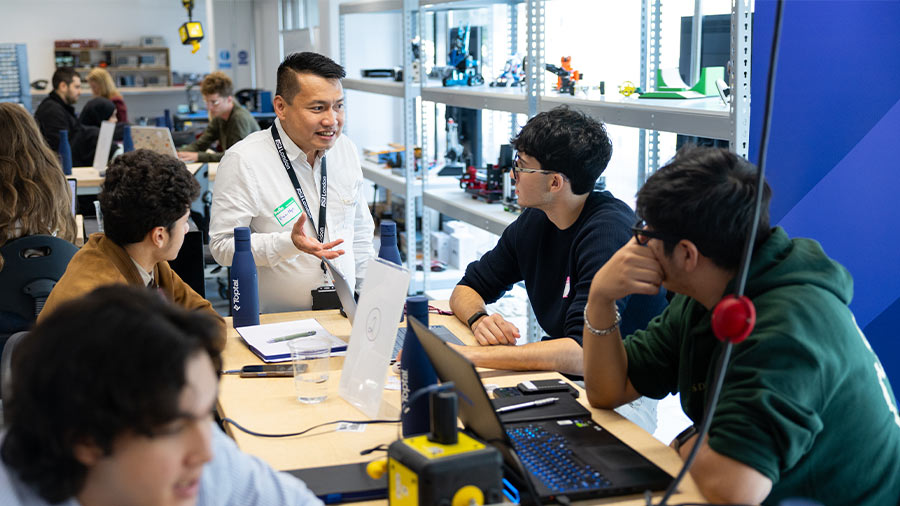
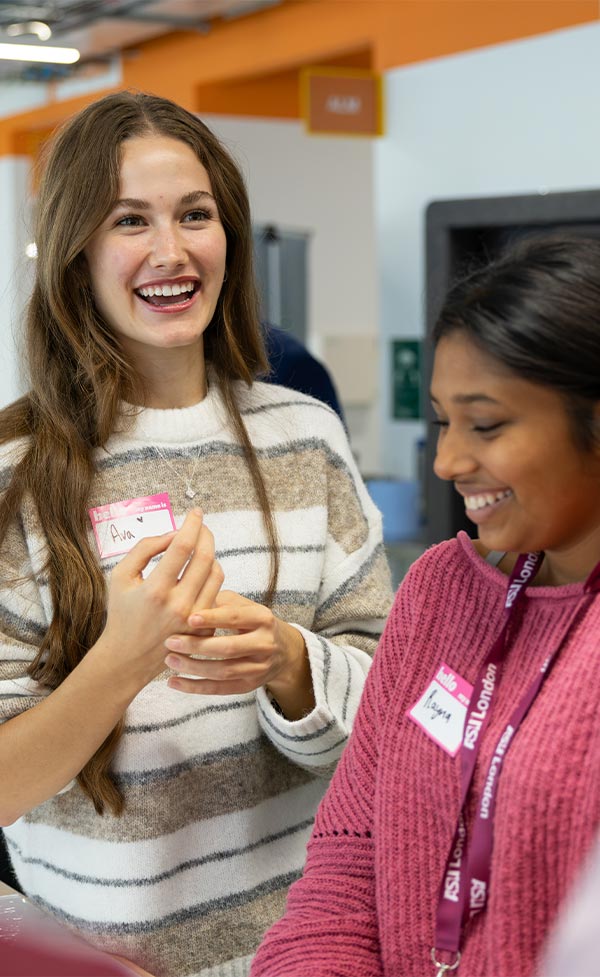
This integrated degree programme prepares students to conceive, design and develop innovative systems and products that address real-world challenges across diverse industries. ASU London’s aim is to treat its Student Engineers as professionals from day one, helping them to acquire the skills demanded by future employers in the engineering field.
Students will work from day one on authentic engineering challenges designed to reflect real-world applications and industry practice, with some projects co-designed with industry and community partners.
This programme is ideal for anyone interested in Design and Mechanical Engineering alongside a strong knowledge of engineering foundations to tackle challenges across a range of industries. The skills and knowledge you’ll gain are equally applicable to the design, development and manufacture of products, systems and processes across engineering.
For those who choose to study the MEng (over 4 years), you’ll graduate with an integrated master’s qualification.
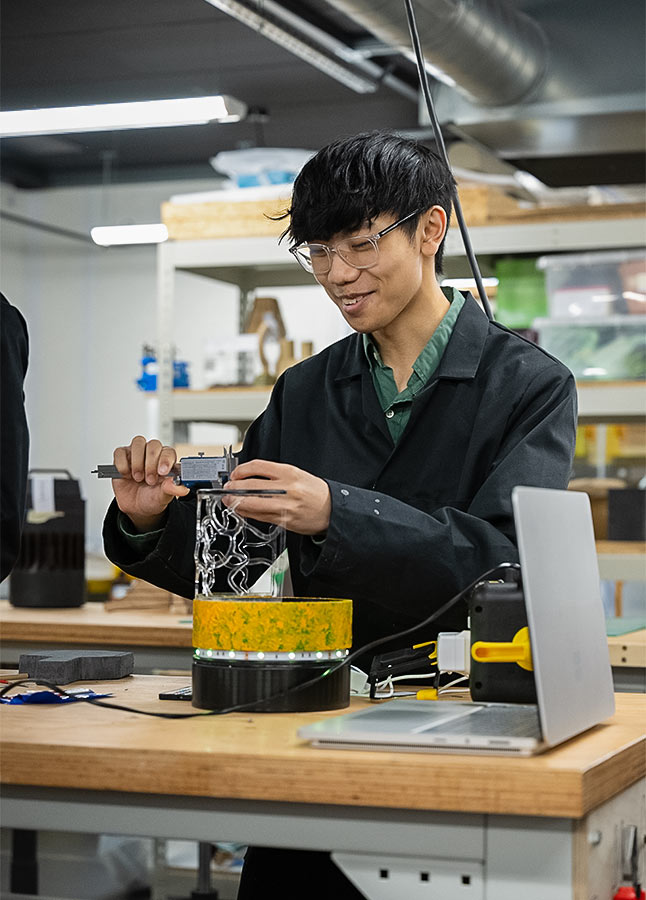
The Mechanical Design Engineering BEng/MEng will comprise the following core and optional modules. Modules shown are those currently planned for the course and may change where necessary. We’ll let you know about any material changes that affect you before you enrol or, if you’re already studying with us, before the change takes effect.
You’ll be designing, analysing and building mechanical products and systems, turning ideas into engineering solutions that work in the real world.
You’ll dig into the fundamentals of solid mechanics, materials, fluid mechanics, dynamics and manufacturing, but you won’t just study them. You’ll use them. You’ll develop designs using Computer Aided Design (CAD), analyse loads and stresses, model and simulate mechanical systems, select materials and manufacturing processes, and test and refine your ideas. Along the way, you’ll balance performance with cost, quality, safety, sustainability and manufacturability.
You’ll get better at solving complex problems, communicating technical ideas, working with others and using evidence to back up your engineering decisions. Expect to design, model, make, test and improve your ideas.
It’s practical, challenging and grounded in real engineering. You’ll develop the mechanical design and problem-solving skills to take an idea from concept through analysis and development to manufacture.
You’ll be solving problems, designing products, and making big decisions as part of a team.
You’ll dig into the fundamentals of solid mechanics, materials science, and manufacturing but you won’t just study them. You’ll use them. You’ll choose materials, model your design with Computer Aided Design (CAD) software, run stress tests, and figure out how to make it – all while thinking about quality, cost, flexibility, safety, ethics, and sustainability.
Get better at presenting ideas, working with others, and backing up your decisions with solid reasoning. Expect to be challenged, to inspire others, supported, and maybe even surprised by what you can create, break or make.
It’s fast-paced, practical, and packed with the kind of experience that makes you stand out. This is engineering the way it should be, hands-on, real-world, and all about bringing your ideas to life
You’ll start by building up your fundamental skills of dynamics, and develop your proficiency in modelling and simulation, along with your programming skills. No need to be an expert – we’ll help you get comfortable using programming tools like MATLAB to create smart, effective solutions. Exploring how motion, forces, and energy interact in physical systems, and how to simulate all of that with code.
You’ll work in a team to take on a real-life engineering scenario. Together, you’ll design, build, and present a working simulation, explaining your approach and showing off the code behind it.
By the end, you’ll be able to think like an engineer, build digital models of physical systems, and make decisions based on real life data. You won’t just understand the theory, you’ll put it into action. It’s hands-on, fast-moving, and focused on the kind of skills you’ll use in your future career.
Undertaking a design challenge, you’ll demonstrate your leadership and impact in engineering. Working on a real-life global challenge, underpinned by the UN Sustainability Goals, you’ll cover environmental, ethical, commercial, social, governance and cultural aspects of engineering.
Reflecting on your strengths and contributions, you’ll develop your teamwork, research, communication and problem-solving skills. These key skills are important for developing your professionalism as an engineer.
You’ll start to look at engineering as a professional multi-disciplinary activity. Designing a prototype for a product, you’ll integrate different aspects of engineering and apply the knowledge and skills you have learnt so far to create a solution to a brief. Through masterclasses and workshops, you’ll work in a team to research, design, manufacture and prototype a product to meet a given specification. You’ll test your prototype and get user and functional feedback to develop your design by implementing the feedback. Through the module you’ll gain practical skills in prototyping and manufacturing, such as 3D modelling, laser cutting and 3D printing.
This module will introduce you to the concepts of fluid mechanics. You will learn how to analyse fluids, the relationships between pressure, velocity and energy within fluids and how to predict fluid flow within a system. You will apply this learning to a number of different projects/scenarios within the module. Through an integrated, problem-based learning (PBL) approach, you will engage in collaborative projects that require the application of theoretical knowledge to design practical engineering solutions. By working on industry-relevant tasks, you will enhance your teamwork, critical thinking, and communication skills, preparing you for further studies and professional engineering environments.
All modules are subject to change and availability. If a module changes after you have been made an offer, you’ll be notified before you start your course.

In Year 2, you’ll build on the engineering fundamentals and professional skills developed in Year 1, applying them to increasingly complex mechanical design challenges.
You’ll deepen your understanding of areas such as structures, stress, manufacturing and energy, while exploring how engineering and product design come together. You’ll consider the needs of users, sustainability and how products move from prototype towards manufacture.
Through practical design projects, you’ll develop your ability to make and justify engineering decisions, bringing together technical analysis, design thinking and an understanding of how products are made.
Building upon your introduction to manufacturing in 1st year, you will learn all about how to design a product for mass manufacture. Learn about the design guidelines for processes like injection moulding and CNC milling alongside techniques in developing designs that are easy to assemble and cheap to manufacture.
Through masterclasses, workshops and design reviews, you will take a product through the phases of the design process from concept to technical design. You will learn how to create technical drawings of your products and optimise their design for manufacturing and assembly.
You’ll work on an industrial design project, usually related to the user-centred product design, considering factors like sustainability, materials and manufacturing methods.
User-centred design is designing things with human factors in mind, so that people and things can interact as safely and efficiently as possible, considering both form and function. Gain the skills to identify the importance of user centred design and in product and workplace design, as well as the concepts of product visualisation. Combining aesthetics (beauty of design) and ergonomics (science of design) you’ll work on the design of a consumer product. You’ll collect feedback from consumers and present your findings. You’ll create a concept, develop 3D visualisations, undertake research with focus groups or questionnaires, allowing you to modify and improve your concepts.
Understand and apply the principles and applications of structural, mechanical, and civil engineering for the design of modern structures. You’ll explore the essential principles of structural engineering and examine their role in the analysis and development of a wide variety of engineering structures across civil, mechanical, and industrial contexts.
You’ll work on real world engineering structures, considering not just the engineering loading but the sustainability, health and safety, quality codes and regulations you must follow to optimise your design.
Appraise and apply ecologically responsible design principles to minimise the environmental impact of your ideas. Working on an eco-design product, process or construction, you’ll assess ecological considerations, whilst applying mathematical, scientific and engineering principles and modelling. Using an ecological approach to design, you’ll consider energy and carbon, the circular economy and materials, climate resilience, biodiversity and water as well as related aspects of well-being. Collaborating in teams, you’ll evaluate the relationship between design, cost and the ethical and legal requirements in the design of buildings. Advancing your knowledge of the underlying engineering principles.
This module will explore concepts of energy and how it can be converted, transferred, and harnessed within mechanical systems. You will apply the principles of thermodynamics and heat transfer to design and test systems that convert heat into useful work or move energy efficiently. Emphasis will be placed on analysing efficiency, minimising energy losses, and developing sustainable solutions aligned with global energy challenges. Through an integrated, problem-based learning (PBL) approach, students will engage in collaborative projects that require the application of theoretical knowledge to design practical engineering solutions. By working on industry-relevant tasks, you will enhance your teamwork, critical thinking, and communication skills, preparing you for further studies and professional engineering environments.
This module explores how mechanical prototypes evolve into reliable, manufacturable systems. You will learn to design and analyse motion conversion mechanisms — systems that transform rotational motion into linear motion — using real-world machine elements such as gears, cams, screws, and belts. The module integrates theory, simulation, and hands-on prototyping to enable you to develop efficient, manufacturable motion systems for practical applications. Through an integrated, problem-based learning (PBL) approach, you will engage in collaborative projects that require the application of theoretical knowledge to design practical engineering solutions. By working on industry-relevant tasks, you will enhance your teamwork, critical thinking, and communication skills, preparing you for further studies and professional engineering environments.
All modules are subject to change and availability. If a module changes after you have been made an offer, you’ll be notified before you start your course.
In Year 3, you’ll deepen your knowledge of key areas, including design optimisation, innovation and entrepreneurship in design engineering. You’ll also have the opportunity to choose optional modules, exploring topics such as materials, manufacturing and machine vision.
Year 3 culminates in a substantial individual research project, allowing you to demonstrate your understanding of engineering in a chosen specialism. Working closely with leading research or industry teams, you’ll develop solutions to complex problems while strengthening your technical, research and project management skills.
You’ll deepen your engineering expertise by tackling advanced principles in analysis, modelling and optimisation. This module challenges you to apply systematic engineering thinking to complex products, systems or structures – designing for flexible, lean and agile environments.
Through problem-based, collaborative projects, you’ll work on industry-relevant challenges that develop your technical capability alongside your teamwork, critical thinking and communication skills. You’ll engage with advanced modelling, optimisation, automated manufacture and data analysis – preparing you for higher-level study and professional engineering practice.
Providing you with the knowledge and skills attributed to successful innovators, and entrepreneurs. Discover the modern drivers of successful innovation, and the various models that have proven ongoing success. Producing an original design, you’ll have the opportunity to innovate and apply your entrepreneurial skills to design engineering. In facilitated workshops, together we’ll examine innovation and entrepreneurial case studies. Through collaboration with an external organisation, you’ll develop your design project along with a business plan, with a managerial, entrepreneurial and design mindset.
Reflecting on all your projects, skills gained, and methods used throughout your degree, you’ll continue to work on your professional portfolio. Underpinned by the Engineering Council’s framework, you’ll demonstrate your progress towards becoming a professional engineer. In particular, you’ll be reflecting upon how your recent experiences relate to the UK-SPEC (UK Standard for Professional Engineering Competence and Commitment) areas of competence. You’ll consider your career trajectory and plan for your specialisation, further study or career prospects.
This module explores how energy is converted, stored, and managed across mechanical, electrical, and thermal systems. You will apply thermodynamic and electromagnetic principles to design efficient and sustainable power systems. Emphasis is placed on system-level integration, hybridisation, and the evaluation of performance, control, and sustainability in modern energy technologies. Through an integrated, problem-based learning (PBL) approach, you will engage in collaborative projects that require the application of theoretical knowledge to design practical engineering solutions. By working on industry-relevant tasks, you will enhance your teamwork, critical thinking, and communication skills, preparing you for further studies and professional engineering environments.
Integrate all your knowledge from your previous learning to complete a major individual project. You’ll be expected to use an analytical and methodological approach involving elements such as project planning, designing, implementation, testing, quality assurance and evaluation and you’ll present your findings in a formal setting. Your project will be a significant piece of work, possibly related to the UN Sustainable Development Goals, smart cities, big data or informed by an industry need.
This is your chance to take the lead. You’ll design, manage, and deliver a project of your own, something rooted in your degree, relevant to industry, and shaped by your interests. You’ll be in charge from start to finish defining the problem, planning your approach, applying technical skills, and producing a full written report. It’s a deep dive into real engineering work guided by a supervisor but driven by you. Expect to develop skills in everything from research, planning, development to hands-on technical skills depending on your project. You’ll meet with your supervisor at key checkpoints to review progress, get feedback, and make sure your project stays on track. Culminating with a final report and a viva, where you’ll present your work and defend your decisions. Along the way, you’ll build serious skills in project management, evaluation, communication, and independent problem-solving, all documented in your portfolio. It’s your final-year project and your biggest opportunity to show what you’re capable of.
You’ll rethink how materials shape the products we design and the impact they have on the world around us. This module challenges you to move beyond traditional materials selection and design for a circular, sustainable economy, considering lifecycle impact, ethical sourcing and corporate responsibility alongside technical performance.
You’ll work with emerging sustainable materials including bio-based polymers, natural composites, recycled metals and additive-manufactured components, testing and characterising them experimentally while applying Design of Experiments. You’ll evaluate environmental and social impact using tools such as lifecycle assessment, and balance technical performance, cost and sustainability in your decisions. Alongside a sustainable redesign project, you’ll develop a CSR strategy proposal, building the skills to make responsible, evidence-based materials choices that drive meaningful change in engineering and design.
Design and build intelligent systems that connect devices, networks, and data in real time to transform industrial processes. You’ll explore how the Industrial Internet of Things (IIoT) is used in smart factories, robotics, and automation – integrating sensors, actuators, and AI to create scalable, secure, and efficient solutions. You’ll cover essential topics like edge and cloud computing, data acquisition, digital twins, communication protocols, and cybersecurity. Using hardware and software, you’ll develop IIoT systems capable of real-time monitoring, predictive maintenance, and adaptive control. Giving you the skills to deliver smart, connected systems that improve performance and decision-making all while tackling the ethical and societal questions that come with deploying large-scale digital infrastructure.
You’ll learn how to design and implement advanced manufacturing systems using the latest digital tools. You’ll explore how CAD/CAM integration, additive manufacturing, simulation and digital twins come together to create smarter, more efficient production processes. You’ll use digital tools to develop solutions that support real-time monitoring, predictive maintenance, and data-driven optimisation. The focus is on building systems that are adaptable, scalable, and aligned with Industry 4.0 standards. This is about using technology to improve how things are made, faster, cleaner, smarter.
The Applications Development module provides you with advanced knowledge and practical skills in designing, developing, and deploying software applications for engineering systems. With the increasing integration of AI-driven technologies, this module emphasises the development of software solutions that incorporate AI components and interact with intelligent systems to address real-world engineering challenges. You will learn software engineering principles, application architecture, software development methodologies, user interface design, APIs, cloud-based solutions, and deployment techniques. Special attention will be given to developing applications that interact with AI models and systems, ensuring efficient integration, scalability, and robustness. Indicative content includes advanced software engineering principles such as user interface and user experience (UI/UX) design, mobile and web app development and the integration of AI models using APIs and frameworks. Real-world case studies from engineering domains such as robotics, industrial IoT, and predictive maintenance provide practical context. The module concludes with a focus on ethical considerations and best practices in software development. You will also explore best practices in software testing, debugging, maintenance, and version control, preparing students to develop high-quality, reliable software systems for engineering applications.
Here’s where machines learn to see and you learn how to make it happen. You’ll explore how vision systems power smart tech in engineering, from spotting defects on a production line to guiding autonomous robots through complex environments. You’ll work with smart tools to build your own machine vision system. That means data acquisition, processing images, extracting features, training AI models, and evaluating how well your system performs. Research deep learning techniques and understand how visual data can be turned into reliable decisions. Through hands-on projects and case studies, you’ll design, implement, and refine a solution to a real engineering task. You’ll reflect on the bigger picture: how machine vision affects industry, society, and ethics. This is your chance to build something intelligent, visual, and impactful and to learn what it takes to bring vision to machines.
All modules are subject to change and availability. If a module changes after you have been made an offer, you’ll be notified before you start your course.
If you choose the integrated master’s, you’ll continue to Year 4 (subject to meeting the progression requirements), where you’ll deepen your understanding of engineering and design principles and apply them to complex, open-ended problems with no clear solutions. You’ll learn to define your own problem areas, conduct independent research and draw your own conclusions.
Year 4 culminates in a group project where you’ll address a global challenge. Working alongside students from other programmes, you’ll apply fundamental and advanced engineering principles while considering user needs and global requirements. You’ll also explore the business and funding aspects of the project. You’ll work with complex systems, developing solutions that require you to make trade-offs and address the limitations of your design.
When you enter Year 4, you’ll develop your skills for designing innovative solutions to complex global challenges. Here, you’ll advance your expertise in utilising cutting-edge engineering principles, methods and tools to address diverse socio-technical problems in engineering. You’ll research real world case studies, showcasing pioneering projects in subject areas such as civil electrical/electronic, materials, and mechanical engineering, demonstrating the application of advanced engineering principles in diverse design contexts.
Effective leadership is the ability to successfully influence and support a team to deliver a shared goal. Here, you’ll learn what it means to be a good leader. You’ll look at the difference between management and leadership, what leadership is, various leadership styles and theories, how to plan strategically, recognising leadership traits, how to develop effective leadership skills, how to create a vision, set the tone, listen effectively, handle conflict, overcome challenges, and address ethics in leadership. You’ll understand, reflect and improve your own leadership performance. By exploring theories, applying them practically, and reflecting on your experiences, you’ll develop the skills necessary to lead diverse teams, manage complex projects, and drive innovation in a globalised engineering environment.
This module develops advanced analytical and computational methods for modelling, analysing, and controlling the dynamics and vibration of complex mechanical systems. Through a problem-based learning approach, you will apply theoretical principles to the design and optimisation of dynamic systems in engineering contexts such as robotics, aerospace structures, and rotating machinery. Emphasis is placed on system-level modelling, numerical simulation, and interpretation of real-world dynamic behaviour. Through an integrated, problem-based learning (PBL) approach, you will engage in collaborative projects that require the application of theoretical knowledge to design practical engineering solutions. By working on industry-relevant tasks, you will enhance your teamwork, critical thinking, and communication skills, preparing you for further studies and professional engineering environments.
Explore the principles of Design for Excellence (DfX) and its diverse applications in the field of design engineering. We’ll equip you with the capabilities and proficiency for applying design principles to achieve excellence across various dimensions. Emphasis will be placed on fostering a holistic understanding of design considerations and may include performance, sustainability, usability, manufacturability, buildability and repairability amongst other factors. You’ll look at emerging trends and multi-criteria for analysing design decisions for Design Excellence, resulting in persuasively communicating your solutions and design decisions to both technical and non-technical audiences.
You’ll develop the ability to think beyond individual components and tackle the complex, interconnected challenges shaping our world. As engineers increasingly work across technical, social and environmental boundaries, this module equips you with the tools to understand and design within complex systems.
You’ll explore Systems Thinking and Systems Engineering, learning how to model relationships, feedback loops and emergent behaviour, and how to identify meaningful intervention points. Working on an industry linked, interdisciplinary challenge such as sustainable transport, renewable energy or global health systems, you’ll apply systems mapping and modelling tools to diagnose problems and propose integrated solutions.
By the end of the module, you’ll be able to analyse complexity with confidence and design strategies that balance technical, social, environmental and economic dimensions, preparing you to lead change in a rapidly evolving global context.
Apply your project management, commercial and business skills in your Global Design Group Project. Working in teams, you’ll develop a working prototype, technical specification, supply chain analysis, manufacturing plan, a five-year business plan, marketing strategy and identification of sources of start-up funds. You’ll critically review new and emerging technologies and use this information to create innovative designs for products, systems, components or processes to fulfil new needs. You’ll also consider business practices within the commercial, economic, legal and social context of engineering processes, evaluating customer and user needs, and being mindful of the need to promote sustainable development.
All modules are subject to change and availability. If a module changes after you have been made an offer, you’ll be notified before you start your course.
As a full-time undergraduate student, you’ll normally study 120 credits each academic year. Each credit represents around 10 hours of learning, so a typical 30-credit module involves around 300 hours of study. This includes scheduled teaching and activities, guided learning and independent study.
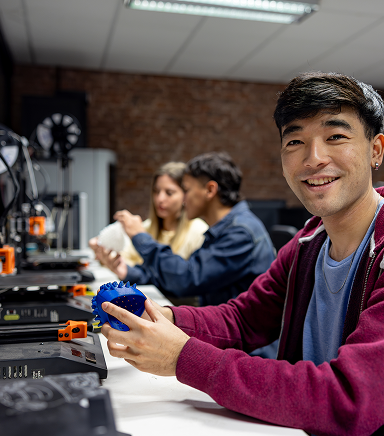
ASU London’s approach to teaching is highly practical and project-based. It is made up of workshops, masterclasses, practical sessions and group work in our bespoke labs – designed to make collaboration and creativity easier.
We assess via reports, presentations, design proposals and more – but we tend to stay away from traditional exams. There are many ways for a student to show competence, progress and understanding, so we try and capture that in our courses.
At the end of this degree programme, we want you to become a resourceful, confident, clear-thinking engineer who is well equipped to work in the global engineering industry, with a strong grasp on ethics and inclusivity.
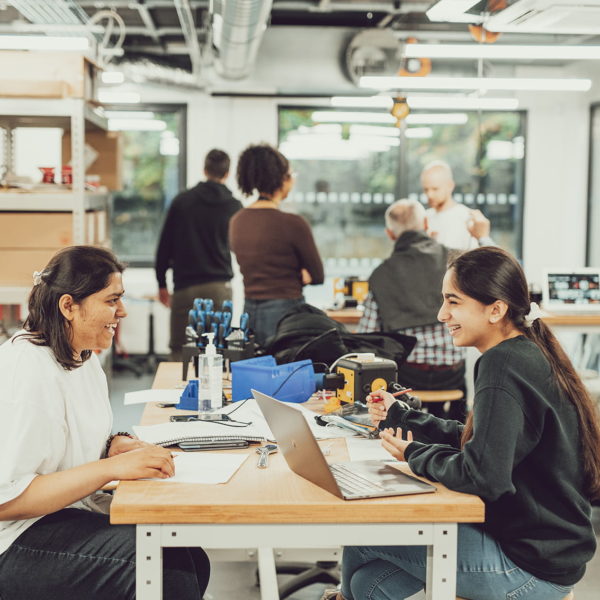
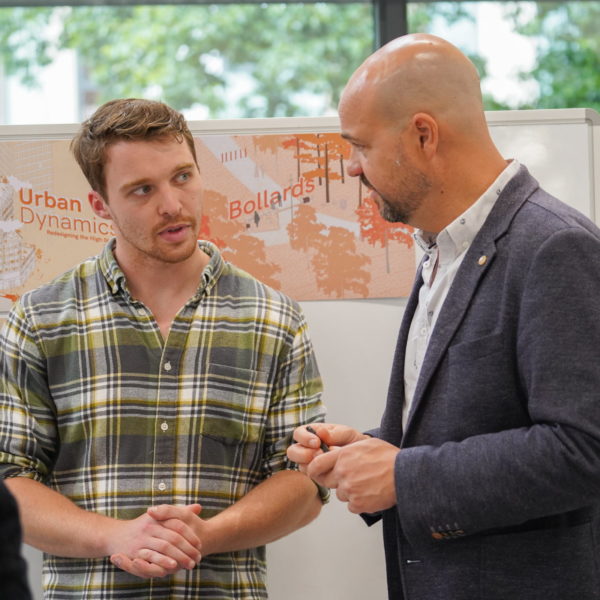
Most projects will involve industrial collaboration, giving you experience of applying your knowledge and skills to real-world industry challenges.
Industry is embedded throughout the ASU London experience, helping you connect your learning with the world of work. This includes meeting industry professionals during projects and masterclasses, which allows students to build their professional network and gain insights into various sectors. This hands-on approach ensures that students gain practical experience from day one, making them well-prepared for placements and future careers in engineering.
In your third year, you’ll have the opportunity to complete your major project with one of our industry or academic partners*.
*Study abroad eligibility for International students is subject to visa status and any travel restrictions.
You can view our full list of country specific entry requirements on our entry requirements page.
English language requirements: English level can only be demonstrated through an IELTS Academic for UKVI minimum score of 6.0 (with no less than 5.5 in all skills).
Visas: For more information on student visas and work rights, please visit our student visa page.
Scholarships: Learn more about funding opportunities here.
Looking for an accelerated way to earn two powerful degrees and launch your international career? ASU London offers students a UK-accredited degree enhanced by the globally recognised curriculum of Arizona State University, ranked the #1 most innovative university in the US for 11 consecutive years (2016-2026) by U.S. News & World Report, with US master’s degree pathways integrated directly into your programme.
Accelerate your future and graduate with both a bachelor's and a master's degree in just 4 years, saving time and expense. And, your pathway to the US is guaranteed if you meet entry requirements.
Study across both the UK and US and double your career connections and prospects. If you want global opportunities for a career, this is your perfect place to start.
With practical, real-world learning and problem-solving to gain valuable professional skills, every ASU London degree is inspired by the university ranked #1 in the US for innovation by U.S. News & World Report for 11 years running.
Earn a degree shaped by innovation, technology, and AI, designed to better prepare you for the careers of today and the future.
Study in London. Study in the US. Earn two degrees and double your experience in two of the world’s most exciting places to learn and live.
Earn a master’s from Arizona State University and tap into over one million alumni, 650+ global industry partners - including EY, Amazon, Apple, Intel, Microsoft, NVIDIA, Boeing, and Goldman Sachs - plus strong UK collaborations for global career opportunities.

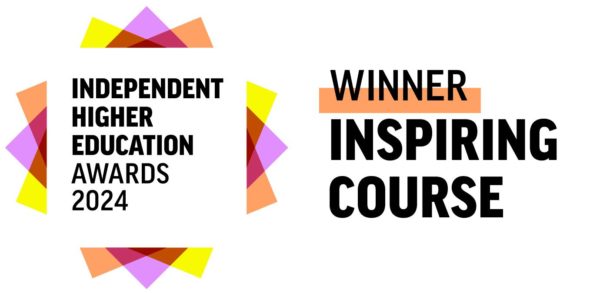
Our Global Design Engineering programme was awarded ‘Inspiring Course’ at the Independent Higher Education Awards 2024 and ‘Empowering Student Voice’ in 2025.
We don’t just hear our student’s voice, we listen. In the 2025 National Student Survey (NSS). We are proud to have outperformed the England sector benchmark across multiple categories, including achieving 93.3% satisfaction in Student Voice compared to the national benchmark of 73.4%. Our students feel empowered: with 100% satisfaction in their ability to give feedback on their course and 100% satisfaction in their freedom to express ideas, opinions, and beliefs.
We were also recognised at the Independent Higher Education Annual Conference 2025 where we were presented with the Student Voice award.
Design engineering is a varied and in-demand career. Our degree will equip you with interdisciplinary skills suited to a range of engineering roles across diverse sectors when you graduate.
Join the next ASU London event to learn more about the Mechanical Design Engineering degree programme.
Real experiences. Real voices. Discover how ASU London is redefining engineering education – straight from the students living it
“Unlike other undergraduate institutions, ASU London focuses on hands-on projects and real-world experiences in partnership with engineering companies. I was drawn to the idea of learning by doing – being able to create something tangible and see the results of my efforts.”
“The education I’m receiving at ASU London is shaping me not just as an engineer, but as a problem solver and innovator. The skills I’m developing are versatile and will influence my future career path, allowing me to adapt to various roles that might extend beyond traditional engineering.”



TEDI-London was the brainchild of three leading names in engineering education. Arizona State University, King’s College London, and UNSW Sydney were already working together to tackle global problems as part of the PLuS Alliance when they saw the need for more diverse, creative-thinking engineering students. TEDI-London was the answer.
For more information about this programme, contact us today by filling out the form below.